


«At Theodorou Group, we approach End-of-Line as an integrated system, designed around the specific needs of each manufacturing facility. By combining industrial automation, robotics, coding, traceability, and product handling technologies, we create solutions that connect individual production stages into a unified and efficient operating environment.»
Dr. Evangelos Theodorou
President & CEO, Theodorou Group
From Packaging Automation to Intelligent Production Management
The demands of modern industry are constantly evolving. The growing number of product SKUs, the need for faster order fulfillment, the pressure to reduce operating costs and inventory levels, as well as increasingly stringent traceability requirements, are creating new challenges for manufacturing businesses.
In this environment, End-of-Line is taking on an increasingly strategic role. It is no longer simply the final stage of a production line, where products are packaged and prepared for shipment. Instead, it is evolving into an integrated system for automation, management, and control, connecting production with sales, warehousing, the supply chain, and the end consumer.
Today's approach requires the coordination of different systems and operations, their integration with the company's own information systems and those of other businesses, and the ability to manage complex orders and multiple order flows with speed, accuracy, and flexibility.
In this article, we explore how modern End-of-Line systems are evolving and highlight the technological capabilities shaping the future of industrial manufacturing.
Key End-of-Line Functions
End-of-Line encompasses all production processes that take place after the primary packaging of products and involve preparing them for storage and shipment. Depending on the requirements of each manufacturing facility, it may include various functions and technologies, such as:
- Case Packing: The automatic placement of products into cases using robotic systems that ensure accuracy, speed, and flexibility when handling different product types and configurations.
- Palletizing: The automatic placement of cases or other packages onto pallets according to predefined patterns and specifications, using robotic systems.
- Pallet Stretch Wrapping: The automatic wrapping of pallets with stretch film to stabilize and protect loads during storage and transportation.
- Coding: Printing variable information either directly onto packaging using inkjet technology or onto labels that are subsequently applied to packages or pallets.
- Automated Material Handling: The transportation, sorting, and routing of cases and pallets through conveyor systems, automated sorters, and other intralogistics solutions.

In modern manufacturing facilities, these functions are no longer treated as independent processes. Instead, they are designed to operate in coordination with one another as components of a single, integrated automation system.
Modern Requirements for an Integrated End-of-Line System
Technological advancements and evolving market needs have significantly expanded the role of End-of-Line. Beyond automating individual operations, modern installations are expected to meet a range of increasingly complex operational requirements
1. Automation and Synchronization of All Operations
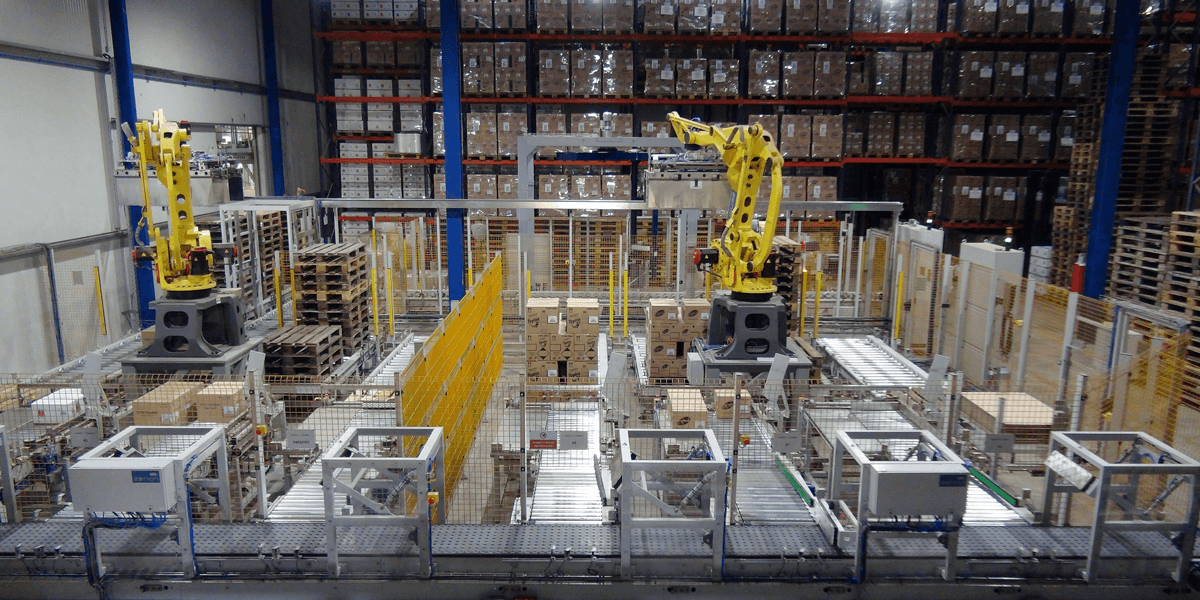
The efficient operation of a modern End-of-Line line requires the full coordination of all individual machines and processes. Through Programmable Logic Controllers (PLCs), Supervisory Control and Data Acquisition (SCADA) systems, and appropriate management applications, the different systems communicate with one another and operate as a unified whole.
This ensures that every stage knows what needs to be done, when it needs to be done, and according to which specifications. As a result, production becomes more consistent, unnecessary downtime is reduced, and the need for manual intervention is minimized.
2. Integration with ERP and External Information Systems
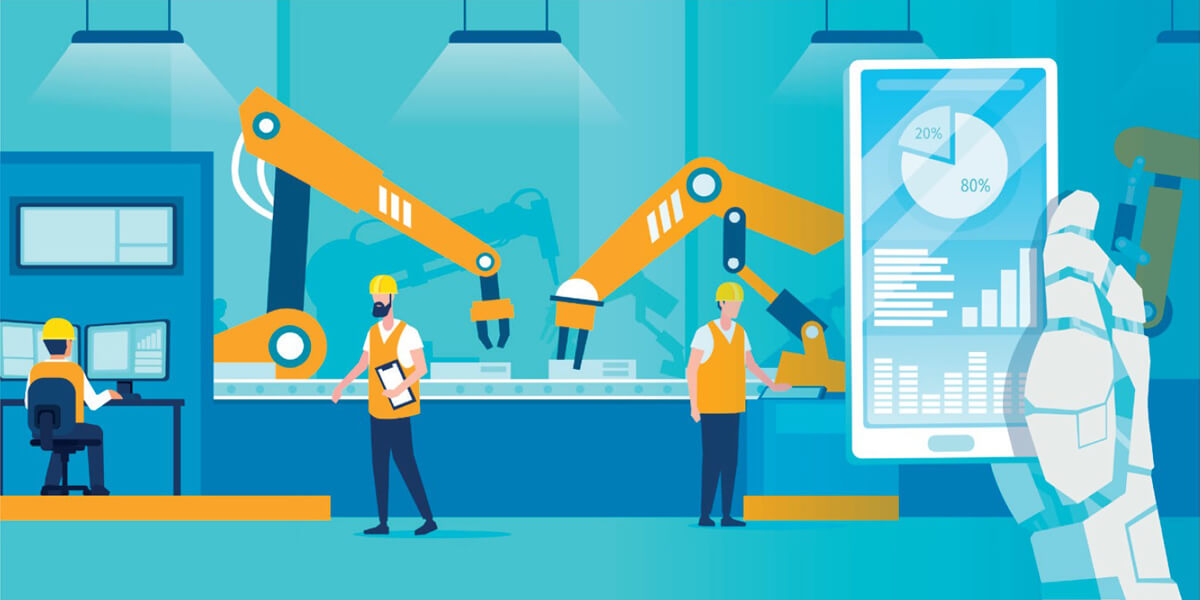
Modern End-of-Line systems do not operate in isolation from the wider business environment. Integration with ERP, WMS, and MES systems enables information exchange between production, warehousing, and commercial operations.
At the same time, through appropriate interfaces and communication protocols, data can be exchanged with third-party systems, including those of supply chain partners, customers, and relevant government authorities. This communication can cover information relating to orders, production, batches, product identities, and shipment status.
As a result, information is no longer confined to the production line but follows the product throughout its entire journey to the final recipient.
3. Aggregation: Linking Individual Packages to Cases and Pallets
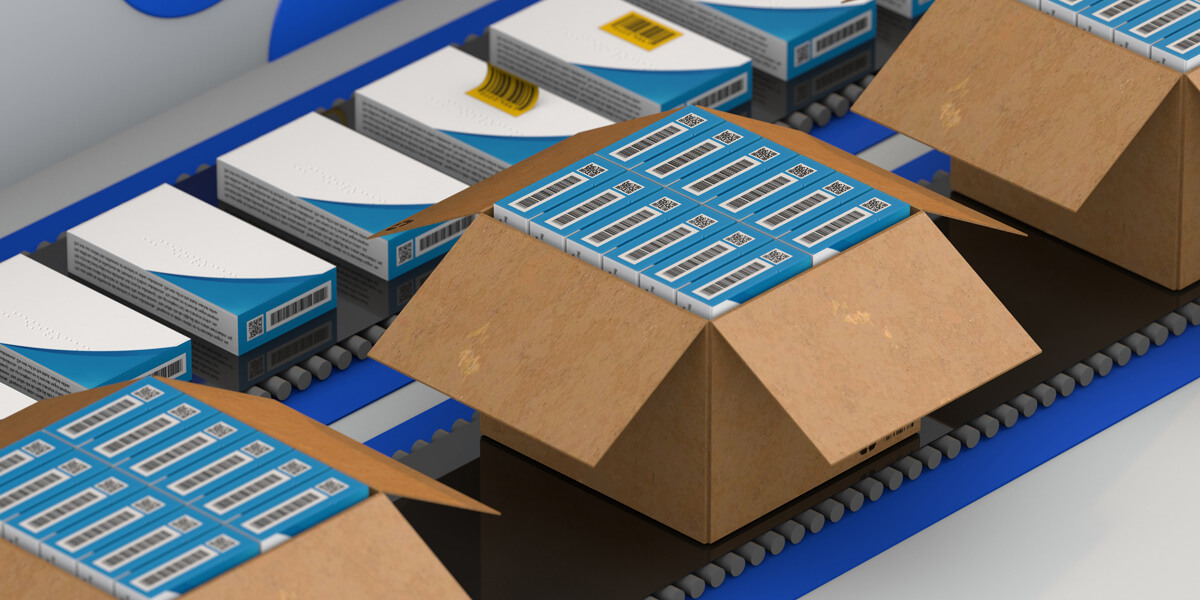
One of the most important modern requirements is the ability to collect and associate information across different packaging levels. Aggregation is the process through which the unique identification codes of individual packages are linked to the corresponding grouped packaging or pallet containing them. For example, the system can identify exactly which cases are included on a particular pallet, as well as the relationship between each case, its corresponding order, and its production batch.
This information is particularly important for traceability, as it enables products to be identified and verified at every stage of the supply chain. At the same time, it facilitates the management of complex orders and ensures accurate matching of products to their final recipients.
4. Direct Pallet Shipping: Shipping Directly from Production
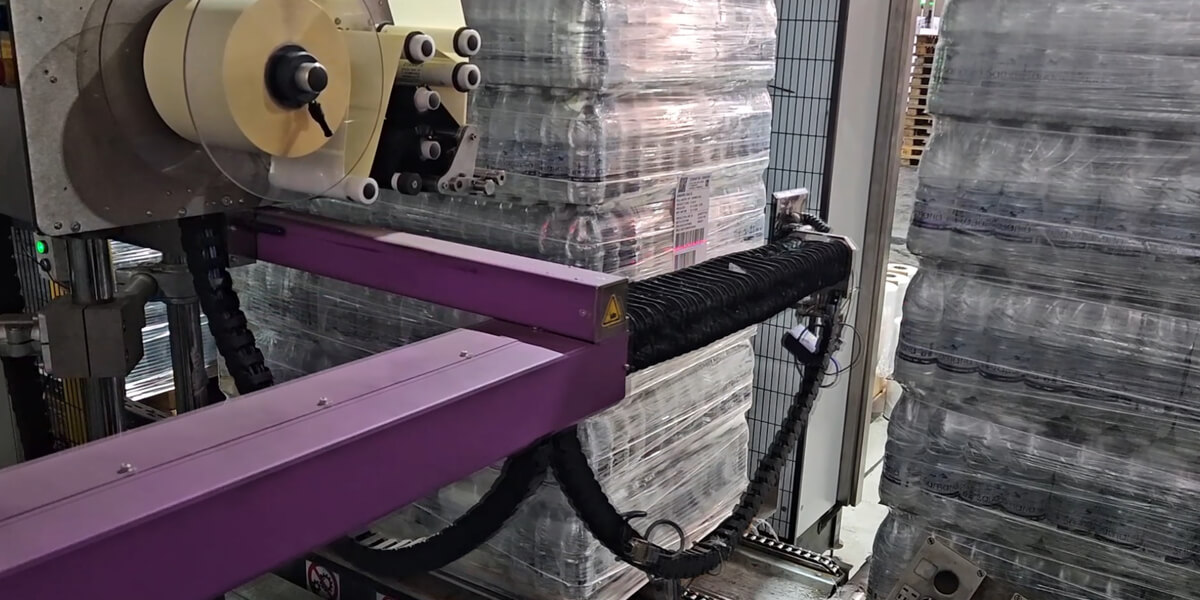
The ability to ship pallets directly from production to their final destination, without the need for intermediate storage, represents another important development in modern End-of-Line systems. Direct Pallet Shipping requires the system to identify the relevant order, organize products onto the appropriate pallets, verify that their contents are correct, and route them to the designated shipping area.
This approach eliminates unnecessary movements and intermediate handling, reduces pressure on warehouse space, and accelerates order fulfillment. It is particularly valuable for businesses with high production volumes and demanding customer delivery requirements.
5. Monitoring Key Performance Indicators (KPIs)
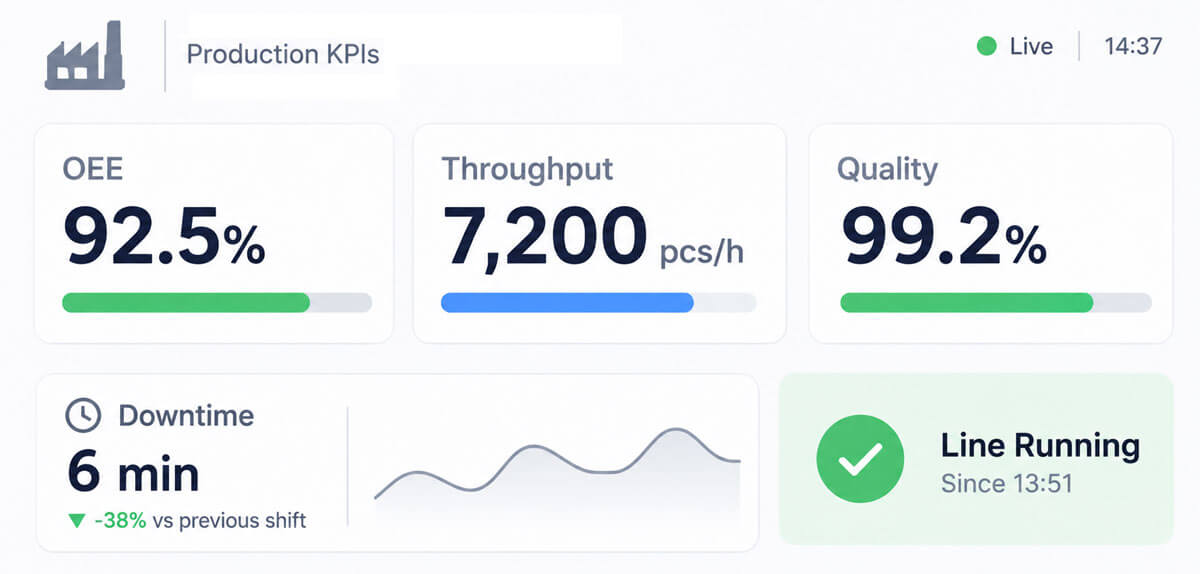 Effective production management requires access to reliable data on system performance. Modern End-of-Line systems can collect and utilize real-time information, providing visibility into critical performance indicators, such as:
- Equipment Effectiveness: Measurement of equipment availability, performance, quality, and overall productivity (e.g., Overall Equipment Effectiveness - OEE).
- Energy Consumption: Monitoring the energy consumption of individual machines and the overall installation.
- Consumables Usage: Measuring the consumption of packaging materials, such as stretch film, labels, and other consumables, to support their optimal management.
- Response Times: Measuring how quickly the system responds to new commands or production changes.
- Order Fulfillment Times: Measuring the time from the start of the process until the order is completed and ready for shipment
Collecting this data enables better production oversight, helps identify areas for improvement, and supports decision-making based on actual performance measurements.
6. Parallel Management of Multiple SKUs and Orders
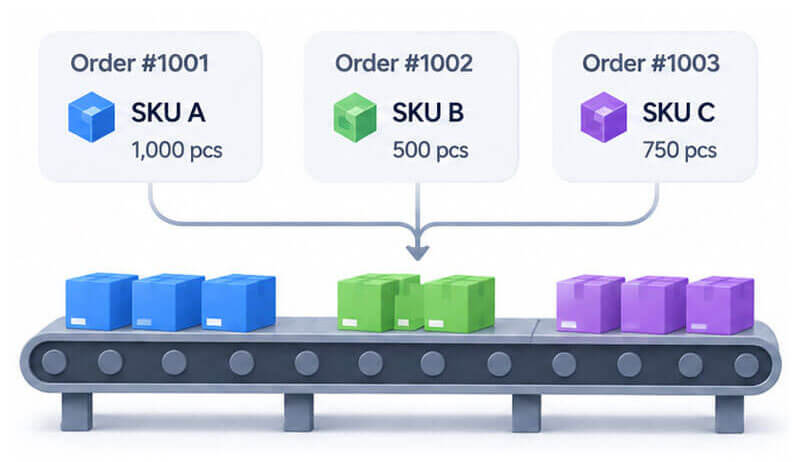
The growing variety of products and the shift towards smaller, more complex orders are creating a need for greater flexibility in End-of-Line systems.
Modern solutions can support the parallel handling of different product SKUs and the simultaneous fulfillment of multiple orders. This means that an integrated system can manage different product flows, identify the requirements of each order, and direct products to the appropriate processes.
This capability reduces waiting times and delays caused by frequent production changeovers, while also enabling more efficient utilization of available equipment.
7. Mixed Pallet Creation
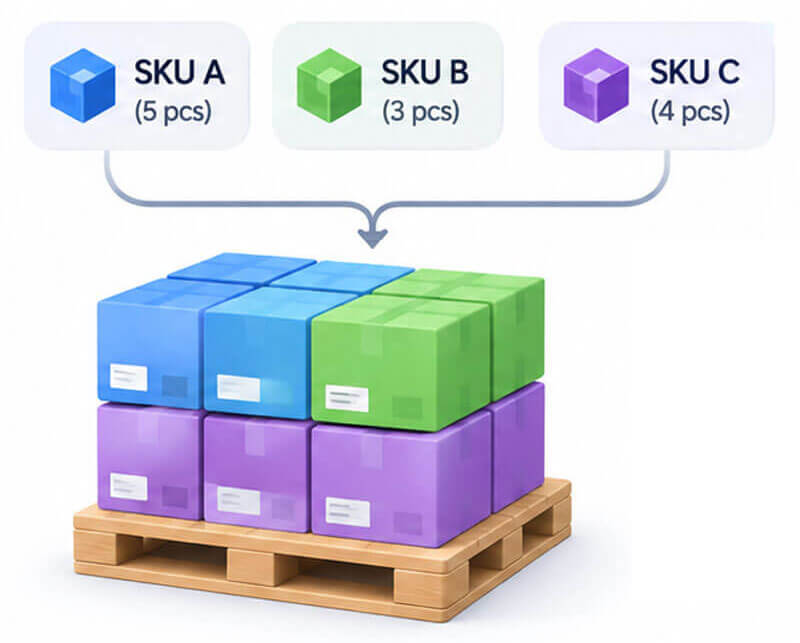
In many cases, customer orders do not consist of a single product SKU but include different products and quantities. The ability to create mixed pallets allows different product SKUs to be consolidated onto the same pallet according to the requirements of each individual order. For example, when a customer places orders involving multiple products, the system can organize their collection and grouping to create the appropriate pallets for shipment.
This operation requires a combination of automated material handling, product identification, and intelligent order management. It helps optimize the picking process and improve customer service.
8. Pallet Quality Inspection Using Machine Vision Technologies
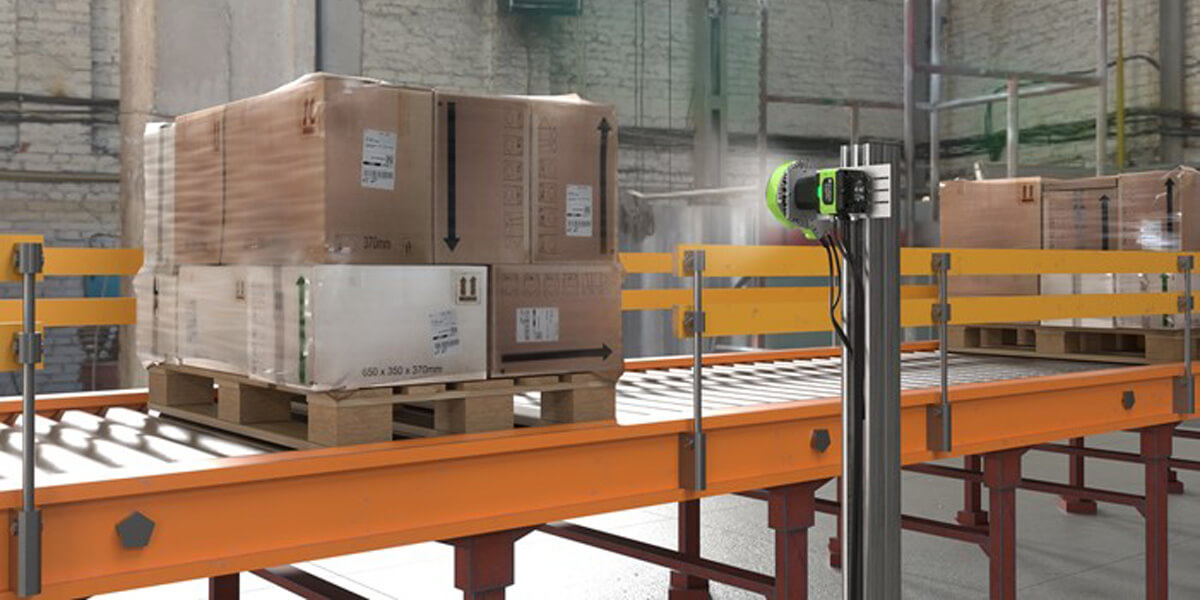
End-of-Line automation is not only about speed and productivity; it also plays a key role in ensuring the quality of the finished load.
Using Machine Vision technologies and intelligent industrial cameras, critical pallet characteristics can be automatically inspected before storage or shipment. Depending on the application, cameras can verify the presence and correct positioning of labels, barcode readability, correct pallet composition, and any deviations from predefined specifications.
Combined with system data, this inspection process enables errors to be detected at an early stage and prevents incorrect or non-compliant loads from being shipped.
The Business Benefits of a Modern End-of-Line System
Implementing integrated End-of-Line automation solutions creates significant added value for manufacturing businesses. The benefits extend beyond the operation of the packaging line, positively impacting the entire production and supply chain process:
- Improved Supply Chain Management: Integrating production, warehousing, and material handling enables better coordination of processes and more efficient management of products all the way to their final destination.
- Enhanced Traceability: Recording and linking data at product, package, and pallet level ensures greater transparency and the ability to track every shipment.
- Greater Production Flexibility: The ability to handle multiple SKUs, different orders, and mixed pallets in parallel enables businesses to respond more effectively to changing market demands.
- Reduced Operating Costs: Automation, fewer manual handling operations, and more efficient equipment utilization help reduce operating costs and losses.
- Faster Order Fulfillment: Coordinating individual operations and enabling Direct Pallet Shipping reduces handling times and accelerates shipment preparation.
- Fewer Human Errors: Automated identification, data management, and inspection procedures reduce the likelihood of incorrect product grouping, labeling, or shipping.
- Improved Visibility and Control: Consolidating data from every stage of the process provides a comprehensive overview of production and supports continuous operational improvement.
The Future of End-of-Line Is Connected

The evolution of End-of-Line reflects the broader industrial transition towards smarter, more flexible, and interconnected manufacturing environments. The challenge for modern businesses is no longer simply to automate palletizing, wrapping, or product coding. It is to ensure that all these operations work together, exchange information, and dynamically respond to the actual needs of production and the supply chain.
At Theodorou Group, we approach End-of-Line as an integrated system, designed around the specific needs of each manufacturing facility. By combining industrial automation, robotics, coding, traceability, and product handling technologies, we create solutions that connect individual production stages into a unified and efficient operating environment.
Because true competitive advantage lies not in automating a single stage, but in the intelligent integration and seamless collaboration of all stages.
 Dr. Evangelos Theodorou is the President & CEO of Theodorou Group. He holds a degree in Electrical and Mechanical Engineering - NTUA (National Technical University of Athens) and holds a Ph.D. in Electronic Systems from the University of Cambridge, England. He has been a lecturer at the Department of Electrical and Mechanical Engineers of the NTUA.